

Trading a Moving Market: Long, Short, and Hedging Explained

Many people approach crypto assets in a plain and simple way: buy and hope the price goes up. So when the market falls, it feels like purely bad news, and the only options seem to be selling at a loss or waiting and hoping it will reverse.
There is, however, more you can do. Depending on where you think an asset's price is heading, there are three basic ways to position yourself. Understanding them gives you options beyond holding and hoping that can change how you respond to market moves.
Going long
The first of the three approaches is the most well-known. Opening a long position in crypto (or "going long") means buying an asset because you expect its price to rise. If it rises, you profit; if it falls, you lose. It's what most people already do when they buy Bitcoin and wait for it to reach a new all-time high.
Going long in crypto is the natural choice when you're optimistic about an asset over time. It's also the most straightforward, since you can go long through both crypto futures trading and spot trading.
Going short
Going short in crypto is the mirror image of going long: it lets you profit when crypto falls. Traditionally this meant borrowing an asset, selling it, and later buying it back at a lower price. On XBO.com, short selling crypto is done more simply, through futures that achieve the same result without you parting with assets you own. Instead, you open a position that gains value if the price drops and loses value if the price rises.
On the futures screen, the two directions sit side by side: going long is the Buy side, and going short is the Sell side.
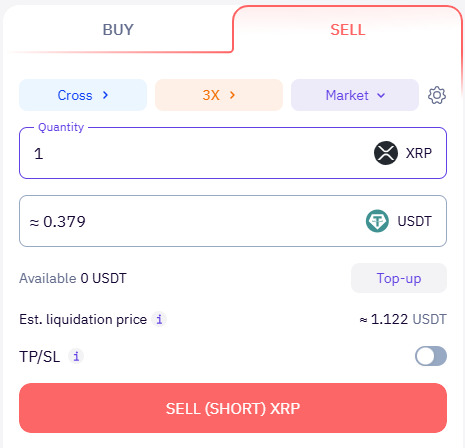
Please note: futures trading usually involves leverage. Crypto trading with leverage magnifies losses as much as gains, and a losing position can be closed out automatically. A short position can lose more than a simple buy-and-hold, so it calls for more caution than ordinary buying.
Hedging
Hedging is the defensive option, a standard tool used in crypto risk management and beyond to protect your holdings. Rather than aiming to profit from a price move, you open a position that offsets the risk in something you already own.
There are many ways to hedge. On XBO.com, you can do this using futures, with a dedicated Hedge mode for exactly this purpose.
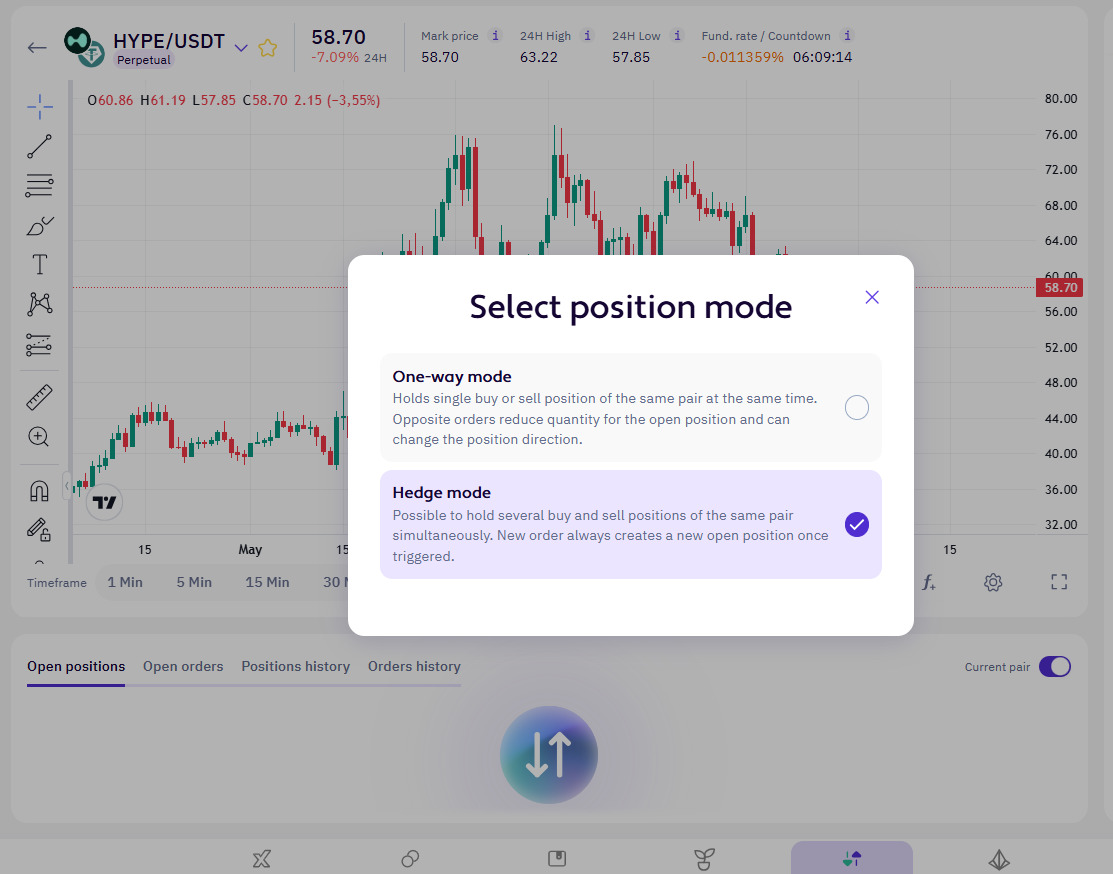
Here's one example of how to hedge crypto in practice. Say you hold Bitcoin for the long term. You believe in it and don't want to sell, but you're worried about a possible dip. You open a short position worth a fraction of your holding, say a quarter of it. If BTC falls, your holding loses value, but the short gains, offsetting part of that loss and softening the drop.
Like any insurance, a hedge has a cost, and it limits some of your upside in exchange for more stability. If the price rises instead of falling, the short position loses value, reducing the gains on the holding you are protecting.
Know your options
Markets move in both directions, and having a plan for each scenario lets you trade with more confidence and less guesswork. Long and short positions, along with hedging, are all available on XBO.com. Take a look at the assets on offer and decide how you want to approach them.
Disclaimer: Our content does not constitute financial advice. It is only intended for informational and educational purposes.